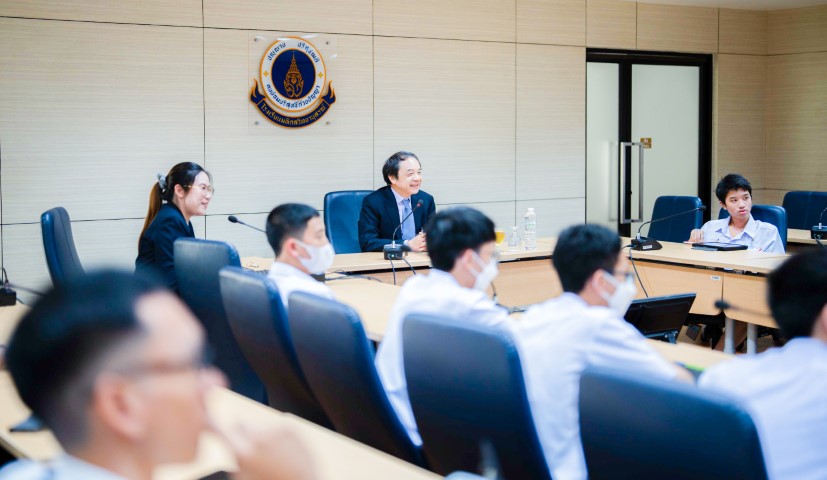
Professor Wang Yifang, Jatuporn Puntree, Pranom Jitklang
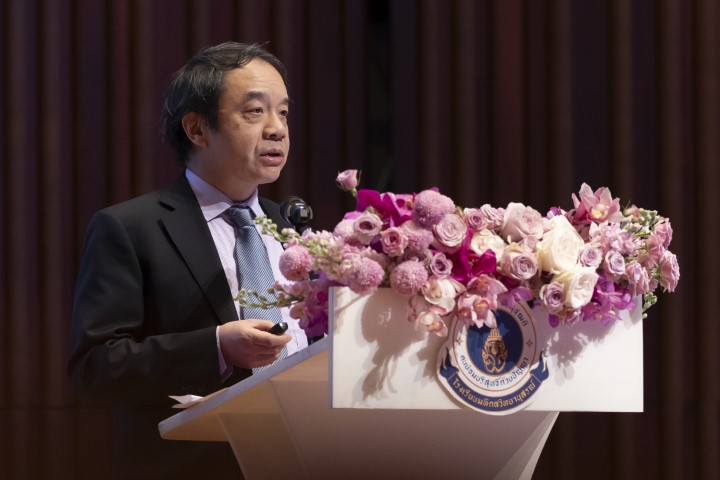
Particle Physicist and Director of the Institute of High Energy Physics (IHEP) Chinese Academy of Sciences
Introduction
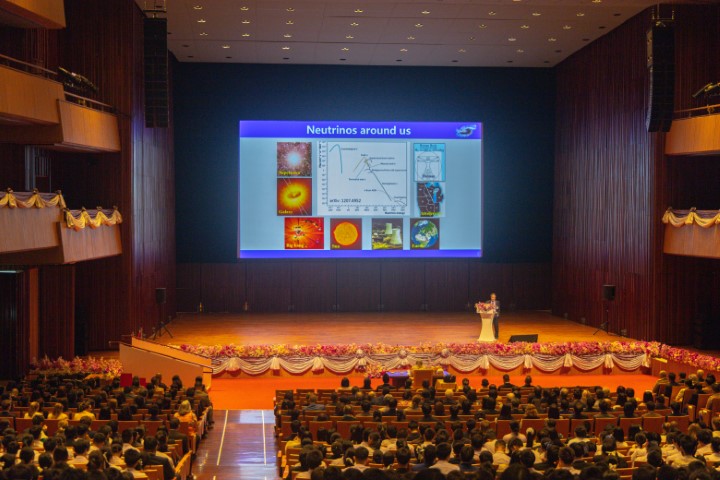
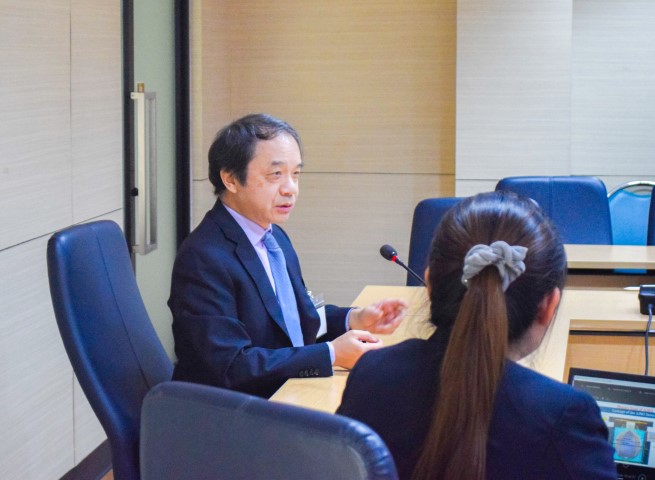
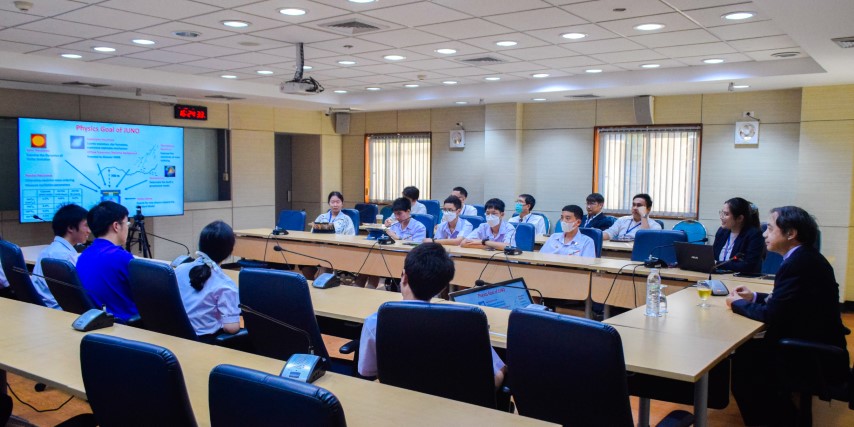
This special lecture was part of the International Students Science Fair 2025 (ISSF 2025), organized by Mahidol Wittayanusorn School (Public Organization). The invited speaker, Professor Wang Yifang, is a renowned particle physicist and accelerator scientist, serving as the Director of the Institute of High Energy Physics (IHEP) at the Chinese Academy of Sciences. He is widely recognized for his contributions to neutrino physics. The lecture aimed to inspire students and teachers at Mahidol Wittayanusorn School, particularly those with a keen interest in physics.
What is a Neutrino?
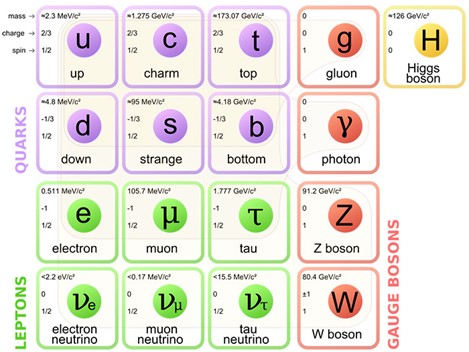
A neutrino is a type of fundamental particle called Lepton. There are three types of neutrinos: Electron neutrino, Muon neutrino, and Tau neutrino
Neutrinos are commonly produced in particle interactions and nuclear decay processes. For instance, in beta decay, a neutrino or an antineutrino is emitted as a byproduct. Neutrinos also originate from nuclear reactions in stars, supernova explosions, and even man-made nuclear reactors.
One of the most fascinating properties of neutrinos is their extremely weak interaction with other particles. They can pass through the entire Earth without being affected. Despite this, neutrinos play a crucial role in new physics and beyond the Standard Model physics. Neutrinos move at extremely high speeds, close to the speed of light. In a past CERN particle physics experiment, neutrinos were initially measured to be traveling faster than light, but later investigations confirmed this result was due to an experimental error.
Because neutrinos travel at extremely high speeds, for a long time scientists believed neutrinos had zero mass. However, researchers from various high-energy physics institutes discovered a phenomenon known as neutrino oscillation—a process where neutrinos can switch between their three types (electron, muon, and tau neutrinos). This discovery confirmed that neutrinos do, in fact, have mass. This groundbreaking discovery earned Takaaki Kajita (Super-Kamiokande Observatory, Japan) and Arthur B. McDonald (Sudbury Neutrino Observatory, Canada) the 2015 Nobel Prize in Physics.
The discovery that neutrinos have mass required a revision of fundamental physics theories that describe the building blocks of the universe. Since neutrinos have an incredibly small mass, their role in the origin of mass in the universe remains a significant mystery. Scientists have recently identified a crucial particle in this context: the Higgs boson. The presence of mass leads to gravitational fields, which allow fundamental particles to combine into larger structures, forming galaxies, stars, celestial bodies, the sun, the earth, and even living organisms like us.
Overview of Neutrino Research
Professor Wang Yifang has played a pivotal role in neutrino physics research, particularly in the Daya Bay Reactor Neutrino Experiment. This project discovered a new type of neutrino oscillation, which has profound implications for our understanding of matter-antimatter asymmetry in the universe. The matter-antimatter asymmetry problem is one of the biggest unsolved questions in physics. According to current theories, the Big Bang should have created equal amounts of matter and antimatter. However, observations indicate that the universe contains far more matter than antimatter—a mystery that remains unsolved.
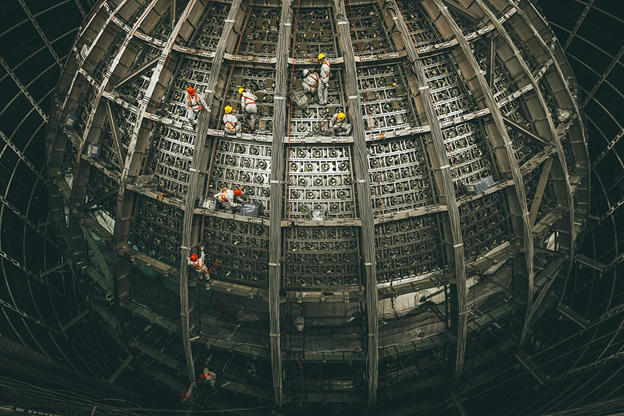
Currently, Professor Wang Yifang is leading the Jiangmen Underground Neutrino Observatory (JUNO), a large-scale international collaboration focused on neutrino behavior. The project involves over 700 scientists from 17 countries, including Thailand.
Key Aspects Discussed
1. Neutrino Detection and Experimental Challenges
2. Measuring Neutrino Mass and Neutrino Oscillations
3. Designing Large-Scale Experimental Projects
4. The Role of Water in Neutrino Detectors
Scientific and Career Perspectives
1. Pathway into the Field of Particle Physics
2. Challenges in Research and Overcoming Obstacles
3. Advice for Young Scientists
The Future of Neutrino Research and Its Applications
Reflections and Conclusion of the Lecture
Students and teachers from Mahidol Wittayanusorn School expressed their gratitude to Professor Wang Yifang for the insights and knowledge shared in his lecture, which broadened their perspectives on fundamental physics and inspired them in their research endeavors.
Professor Wang Yifang encouraged students to be inquisitive, ask questions, and embrace the challenges of research, regardless of whether their work has immediate practical applications. The lecture concluded with group photo taking as a memento of this inspiring exchange.